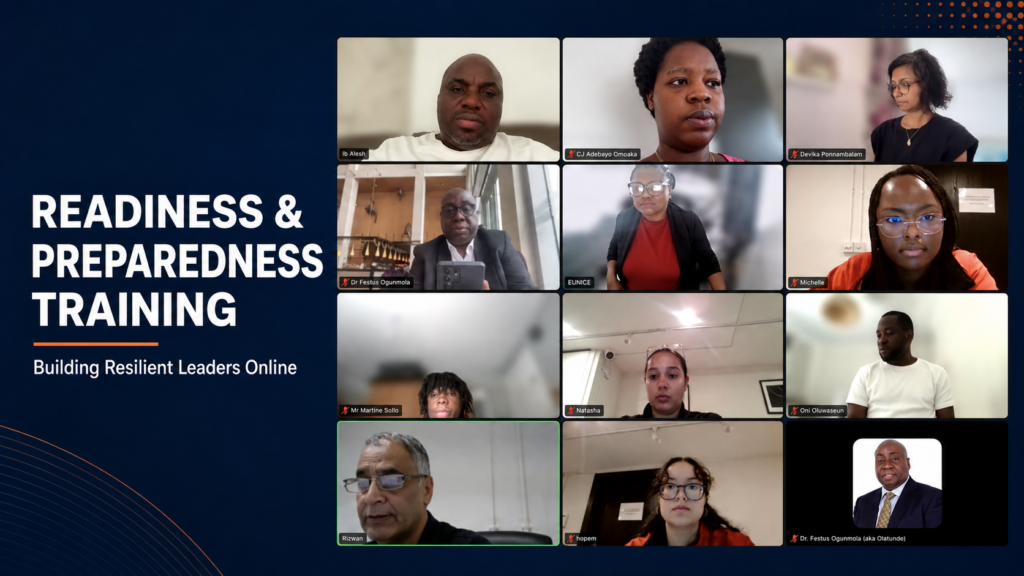
Next Step Initiative’s Community Heritage Leadership trainees strengthened their skills in organisational preparedness, risk management, emergency response, communication, decision-making and resilient leadership through an intensive three-day training programme.
Building Resilient Leaders Through Readiness and Preparedness Training
As part of the Community Heritage Leadership Training Programme, trainees participated in a comprehensive three-day Readiness and Preparedness Training workshop designed to strengthen their confidence, leadership skills and ability to respond effectively to workplace challenges and unexpected situations.
The training explored how individuals and organisations can move from reacting to problems towards anticipating risks, preparing appropriate responses and maintaining essential services during periods of disruption.
A central message throughout the programme was that organisational resilience begins with prepared people. Trainees were encouraged to understand their personal responsibilities, take ownership of their decisions, communicate clearly and contribute positively to the organisations and communities in which they work.
Understanding Organisational Readiness
The first day introduced the foundations of organisational readiness and the difference between readiness and preparedness. Participants examined the qualities that enable organisations to operate effectively before, during and after unexpected events, including strong leadership, clear responsibilities, effective communication, risk awareness and continuous learning.
Trainees also considered the importance of professionalism, accountability, integrity and building trust within a team.
Through a readiness assessment and personal reflection exercises, participants identified organisational strengths, areas requiring improvement and personal actions they could take to become more prepared and dependable leaders.
Identifying and Managing Risk
Risk awareness formed an important part of the training. Participants explored operational, financial, strategic, reputational, environmental, cybersecurity, and health and safety risks.
Working collaboratively, trainees identified potential risks that could affect an organisation and assessed them according to their likelihood and potential impact. They also learned how risk registers and early warning indicators can help organisations identify problems before they develop into serious incidents.
These exercises encouraged participants to think critically, prioritise effectively and understand that managing risk is a shared responsibility.
Emergency Response and Business Continuity
The second day focused on emergency preparedness and operational response. Trainees examined how organisations should respond to emergencies involving people, property, information, services and reputation.
The programme introduced the four stages of emergency management: prevention, preparedness, response and recovery. Participants also explored evacuation procedures, incident reporting, emergency communication and the importance of preserving life and ensuring safety.
Business continuity sessions helped trainees understand how organisations can identify their most critical activities, protect essential resources and continue delivering important services during disruption.
Practical scenarios—including severe weather, an IT failure, staff shortages, a building closure, a cyberattack and a media enquiry—allowed participants to practise decision-making, teamwork and communication under pressure.
Leadership, Resilience and Artificial Intelligence
The final day concentrated on building long-term organisational resilience. Participants explored adaptive leadership, emotional intelligence, leading through uncertainty, supporting colleagues and maintaining public confidence during challenging situations.
The workshop also introduced the role of artificial intelligence in organisational preparedness. Trainees considered how AI can support risk assessment, emergency planning, communication, reporting and predictive analysis, while recognising the importance of ethical practice, cybersecurity and continued human oversight.
Turning Learning into Action
The training concluded with a realistic crisis simulation and the development of personal, team and departmental readiness plans.
Participants were required to apply their learning through leadership, communication, decision-making, teamwork, documentation and recovery planning. Each trainee was also encouraged to identify practical actions they could implement within their placement or workplace.
By combining interactive learning, group discussions, role play, risk-assessment exercises, crisis simulations and action planning, the training provided participants with knowledge they can apply in real organisational settings.
The Readiness and Preparedness Training contributes to the wider objectives of the Community Heritage Leadership Training Programme by supporting trainees to become confident, responsible and resilient leaders who can respond constructively to uncertainty, protect people and services, and contribute to stronger organisations and communities.